
Table of Contents

 haroon
1 week ago
Example of Review of Literature in Research Proposal: Step-by-Step Guide for Students
Understanding an example of review of literature in a research proposal is a critical first step for any student preparing a research proposal. A literature review isn’t just a summary of prior studies it forms the backbone of your research, helping you identify gaps, organize your sources, and improve the overall quality of your proposal. Explore Literature Review Services can guide you in finding authoritative sources, handling references, and identifying patterns that support your cause.
A large number of students are not able to find authoritative sources, handle references and identify patterns that support their cause. You can be considered academically credible and come up with an excellent proposal through the use of credible and well-documented materials and by using appropriate referencing procedures.
A comprehensive literature review will help clarify your own thoughts, help demonstrate how your study will contribute to the broader academic discussion, and precondition your methodology and goals.
Purpose and Academic Significance of Literature Review
A literature review is more than just a summary of previous studies; it’s a way to demonstrate your familiarity with existing research. By reviewing what’s already been done, you show that you understand the conversations and debates in your field.Detailed Literature Review Guide can help you approach this process effectively.
It also plays a crucial role in establishing theoretical frameworks and shaping your research methodology. Referring to the previous research allows you to support your course of action and prove that your techniques are appropriate in the context, which makes your proposal an academic retaliation.
As a student, a good review provides:
Academic credibility: Shows you can engage with and critically analyze scholarly work.
Clarity: Organizes information in a logical, easy-to-follow structure.
Research impact: Highlights gaps or underexplored areas that your study can address.
The value of a literature review extends beyond academia. Findings from a well-structured review can inform policy decisions, guide practical innovations, and influence future research directions. By taking a systematic approach, students ensure their work is both academically robust and practically relevant.
How to prepare a Literature Review
When learning how to prepare research proposal, a structured approach to the literature review is crucial. Following clear steps ensures that your review is comprehensive, coherent, and academically robust.
Create a keyword list aligned with research objectives
make up a list of keywords. Find words that are descriptive of your topic and questions. These keywords will guide your search and ensure that you address all the key terms.
Search for relevant academic sources
Attend to peer-reviewed and credible materials to enhance the quality of your review.
Evaluate credibility and relevance of sources
Make sure that it is valid, up-to-date, and it is relevant to your research objectives. Check its methodology, findings and influence.
Organize sources by themes, methods, or chronology.
Categorizing them in this manner demonstrates tendencies or controversies, or voids. The articulate organization helps to make your review more convincing and easier to read.
Identifying Research Gaps and Trends
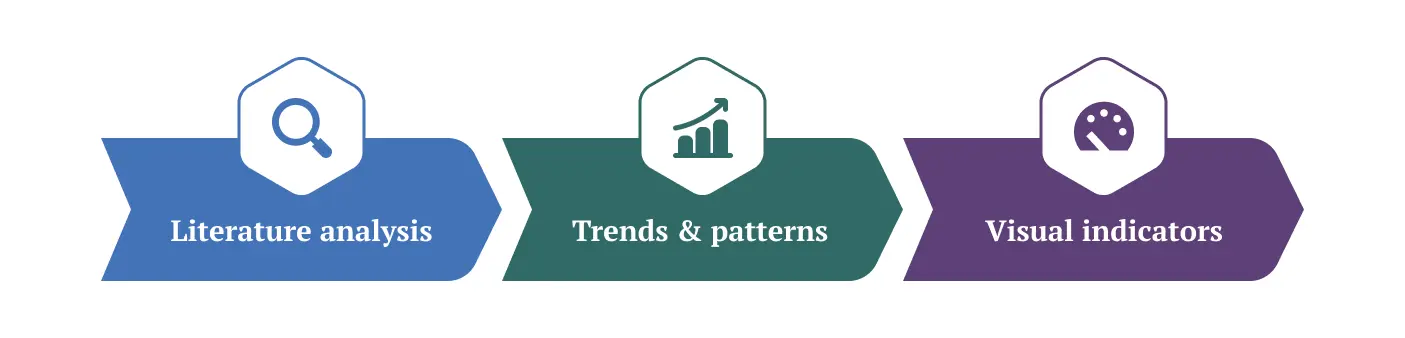
An example of review of literature in research proposal illustrates how to detect patterns, debates, and gaps within existing research. Critical analysis, rather than mere summarization, is key.
Detect patterns and trends – Identify recurring themes, consistent findings, and methodological approaches across studies.
Spot research gaps – Look for areas where evidence is lacking, conflicting, or outdated.
Strengthen research objectives – Use identified gaps to refine your research questions and methodology.
Use visuals or diagrams – Charts, tables, and conceptual maps can clearly highlight trends and gaps, making your analysis more accessible.
Making your review a consistent area of interest and not a summary only approach will help make sure that the proposal goes somewhere valuable.
Structuring the Literature Review in a Proposal
Access professional academic help to craft a literature review that is not only thorough but also clearly structured and easy to followExample of Review of Literature in Research Proposal: Step-by-Step Guide for StudentsExample of Review of Literature in Research Proposal: Step-by-Step Guide for Students. A distinct outline demonstrates your intentions of the research and provides the readers with a logical narrative.
There are four approaches that you should take into consideration when developing your literature review:
Thematic Approach – Group studies on the basis of basic themes or topics. This demonstrates trends, discussions, and areas lacking, and portrays great understanding of the discipline.
Chronological Approach -Arrange studies chronologically in the sequence of their publication. This can be used to demonstrate where your research comes in the development of the topic.
Methodological Approach - Rank the studies by their methodology. This justifies your way of choice and demonstrates how your decision is connected with previous work.
Theoretical Approach:
By Theories or Frameworks Prepare your review around great theories or models. This underlines the intellectual basis of my questions.
In order to have a chance to sustain a coherent flow, the logical design, one should include broad, general studies in the beginning and then proceed to the specific, recent work. Follow headings and subheadings that reflect your research purposes such as:
Introduction to Key Themes
-
Historical Development of the Field.
-
Current Research Methodologies.
-
Hypothetical Frameworks and Models.
-
Uncovered Gaps and Future Directions.
This arrangement enhances the clarity and comprehensibility which indicates the audience to the background and the rationale of research. Having your review aligned with these strategies is now offering the students a roadmap evident to present evidence, support reasons they have chosen to do so, and demonstrate academic rigor.
Tips for Writing and Maintaining Academic Quality

When learning how to prepare a research proposal, maintaining academic quality is essential. Key strategies include:
-
Paraphrasing and Proper Citations will help you save yourself form plagiarism and you must always remember to cite your sources.
-
Check plagiarism checker and maintain records of all references.
-
Organize notes by theme, create concise summaries, and highlight key arguments.
-
Write clearly, avoid jargon, and maintain a professional academic voice.
The tips will make sure that your proposal can be considered credible, readable and academic.
Common Mistakes to Avoid
The following are some of the pitfalls that should be avoided in order to come up with a good literature review:
It is important to avoid too broad and too narrow topics; they may either dilute or bring about gaps.
Do not overlook methodological variety or current research, and your analysis will be not complete.
Inability to connect literature to your research purposes makes the proposal weak.
The use of repetition, formatting errors, or referencing errors are all products of lack of professionalism.
Proper, coherent and considerate writing is vital towards a persuasive, believable statement of review.
Tools and Resources for Efficient Literature Review
Reviewing with the help of tools and resources can be simplified:
-
Digital databases allow accessing scholarly articles, journals, and books in a short period of time.
-
Any type of research can be organized and analyzed with the help of AI tools and academic templates.
-
Reference and annotation software processes both the sources and citations.
-
Professional support is expert advice provided to polish the structure, analysis, and quality of the writing.
By leveraging these resources, you will save the time and improve the overall quality of your review.
Conclusion -Assuring a good literature review.
A research proposal is propelled by the literature review, which gives the research table credibility as well as great practical value. It requires an analytical, professional system, a logical approach to the selection of sources, their arrangement, and synthesis of the findings.
With the help of checklist steps, gap identification, quality maintenance, and the right tools, students create a more powerful proposal, more engaging goals, and more valuable input in the field. Critical analysis of work situates the study and shows a researcher the competence needed to foster the study.