
Table of Contents
 jenelia
2 weeks ago
Scopus Journal Search: How to Identify the Right Journal Using the Scopus Journal List
A scopus journal search is one of the most stressful stages of academic publishing.Scholars get into this task with researched materials but uncertain confidence in choosing journals for publication. Dilemmas in journal choices arise not out of a lack of effort but out of a lack of clear signals amidst information overload.
Common fears associated with the process include:
-
Submitting to the wrong journal and suffering an instant rebuff
-
Publication of articles in the journal: Choosing a journal that looks indexed but lacks real credibility
-
Accidentally violating institutional or university publication norms
Such ambiguity is to be expected. The Scopus database itself is complicated enough to make it seem like you are guessing in the dark if you were to explore it unsupervised.
What scientists need is reassurance and structure. With proper Scopus journal publication assistance, the search becomes a guided academic process instead of a risky gamble. This blog This content sets clear expectations and provides direction so your decisions feel informed, not forced.
Academic Significance of Scopus Indexing
Indexing in the Scopus database is one of the indicators of good quality in academic publications. It ensures that it has adopted proper procedures of reviewing through peers along with proper publication guidelines. This makes it prestigious among authors.
Importance of Scopus Indexing:
-
Boosts the international exposure of research work
-
Enhancing citation potential and scientific impact
-
An important part of evaluation of institutions and professional development
It is important to note:
-
An indexed journal ensures that the research published in the
-
The right journal will make your study relevant to your field of research.
In publishing, a combination of both relevance and credibility is essential for success.
Structural Complexity Behind Scopus Journal Search
A scopus journal search can prove quite challenging primarily due to the nature of the Scopus environment. The presence of thousands of journals can often lead to more confusion rather than clarity.
Factors that contribute to this complexity include:
-
The large number of journals that exist in the Scopus database
-
Ambiguities in journal scope of publications
-
Incorrect labeling of active and ceased indexing status
-
Relying on third-party or unofficial journal data
Apart from the technical issues, there is psychological pressure as well for researchers. Deadlines, expectations, and fear result in tougher decision-making for researchers.
These are important aspects that can enable researchers to select journals in a logical rather than emotional manner, resulting in more correct and confident decisions.
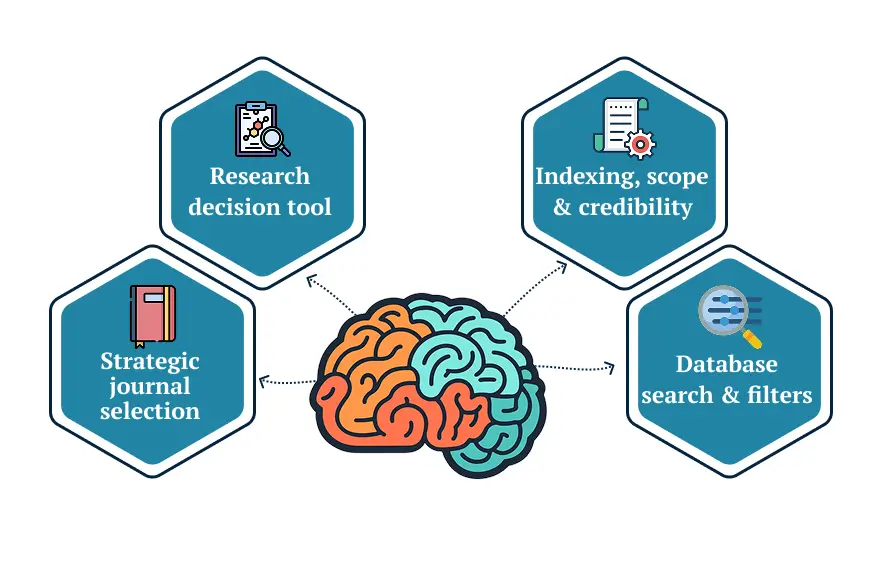
The Scopus journal list is referred to as a reference database, but it is not enough to simply look to indexing to use this tool effectively. Here is the breakdown:
The Scopus journal list is a reference database, not a recommendation guide. Simply being indexed doesn’t guarantee a journal is the right fit for your research.
Key points:
-
Confirms indexing but not research suitability
-
Blind selection increases rejection risk
-
Read scope statements and recent publications carefully
-
Avoid relying on outdated or third-party sources
-
Use a strategic mindset to match your research with journal focus
Proper interpretation turns the list into a practical tool, helping you make informed and confident journal choices.
Research-First Thinking vs Journal-First Thinking
One of the pitfalls in undertaking a Scopus journal search is to begin with the journal and not with the research itself. It is common practice for new researchers to target impact journals without ascertaining whether their research aligns with it or not.
Having a research-first mentality turns this process upside down: your research output now drives your choice of target journal, rather than the other way around. This leaves you confident that your research reaches its intended audience.
Key principles:
-
Define your contribution: Clearly articulate the problem your study addresses and your unique insights.
-
Academics and discourse: State the people your research will help and the debates your research contributes to.
-
Ensure relevance to target journals: Select journals with goals, target audience, and research methods aligning with research interests.
-
Build for the long term: Relevance and visibility are more important than acceptance.
-
Shift focus from acceptance-oriented journals to relevance-oriented journals: Choosing a journal on the basis of relevance rather than prestige will guarantee greater acceptability and relevance.
-
Using research as a lead when conducting a Scopus journal search improves acceptance rates, is time-saving, and creates a strong academic standing.
Manuscript Scope Compatibility Analysis
After you have defined your research, you need to move on to analyzing your manuscript against the scope of a particular journal in performing scopus journal search. Undoubtedly, quality journals may refuse to work with your manuscript if your particular research does not fit their area of interest.
Key considerations for compatibility:
Match objectives with journal aims. Make sure your research aims and objectives match the categories of topics and themes the journal favors.
Check subject categorization: The journal may contain some specific subject matters in a particular field or a combination of fields. Therefore, your manuscript has to be categorized in a relevant subject area that best reflects its content.
Ensure methodological fit: A journal that is dominated by qualitative research may not consider purely quantitive research regardless of the material.
Consider reader and reviewer expectations: Familiarity with the anticipated expectations of readers will enhance the prospects for acceptance.
Assess novelty and relevance: Scholars look for novelty and relevance when it comes to publishing their articles.
A careful scope compatibility analysis can convert a scopus journal search from a guessing process to a decision-making process and hence improve acceptance and impact.
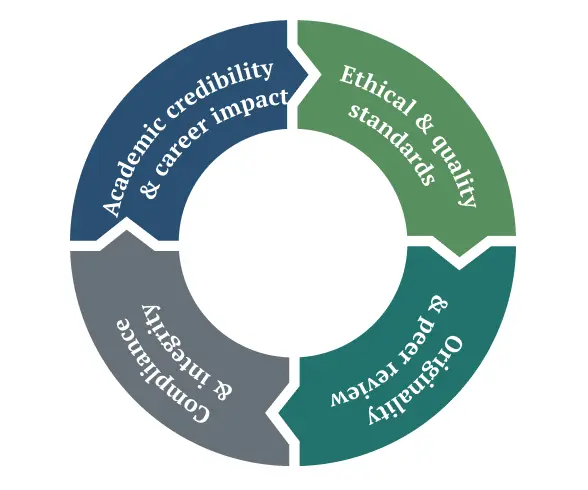
Selecting the right journal is critical for maintaining academic integrity and protecting your reputation. An academic research support platform guides this process, helping avoid unreliable journals and long-term consequences.
-
The academic research support platform used in leveraging helps researchers identify credible and trustworthy journals.
-
If the credibility of journals is poor, several risks may arise, including misrepresentation of research findings.
-
Publishing in unreliable journals can damage academic reputation and future career opportunities.
-
Adhering to institutional policies guarantees adherence to ethical and professional norms.
- Incorrect journal selection can have long-term consequences, including retractions, wasted effort, and diminished recognition.
Role of Expert Guidance in Journal Selection
A scopus journal search can sometimes feel like navigating a maze. Independent searches may fail when journals have overlapping scopes, your research is interdisciplinary, or indexing information is unclear. In these situations, expert guidance becomes essential.
-
When independent search fails: interdisciplinary studies, unclear scopes or outdated indexing
-
Complexity beyond listings: journal aims, methodologies, and audience preferences
-
Academic validation: ensures manuscript aligns with journal standards and credibility
-
Reducing rejection: improves acceptance chances and shortens revision cycles
Expert support turns a stressful search into a strategic, efficient process
Conclusion
A structured Scopus journal search approach transforms what is often a confusing research process into a clear, navigable journey. Feeling uncertain isn't unusual-students frequently find themselves overwhelmed by navigating large academic databases. You make informed, evidence-based decisions rather than relying on guesswork through following a systematic strategy. This approach does not only bring clarity to your path but also helps you insist on confident academic action that empowers you to progress with purpose and assurance in your research.